Decluttering Before a Move: The Room-by-Room Guide That Saves Time and Money
The average Los Angeles household moves every 5 to 7 years. And every single time, the same thing happens: you start packing and realize you own far more than you thought. Boxes multiply, the moving truck quote goes up, and you end up paying to transport things you'll never unpack at the new place.
There's a better way. Decluttering before a move saves real money (movers charge by weight and volume), reduces stress on moving day, and gives you a fresh start in your new home. Here's how to do it room by room.
When to Start
Ideally, start decluttering 4-6 weeks before your move date. This gives you time to sell items, schedule donation pickups, and make thoughtful decisions rather than panic-packing everything.
The timeline:
- 6 weeks out: Start with storage areas (garage, attic, basement, storage unit)
- 4 weeks out: Tackle bedrooms and closets
- 3 weeks out: Kitchen, bathrooms, and living spaces
- 2 weeks out: Home office, utility rooms, and final sweep
- 1 week out: Pack what remains
The Four-Box Method
For every room, set up four clearly labeled boxes or areas:
- Keep — it goes to the new home
- Sell — it has value and someone else will want it
- Donate — it's useful but you don't need it
- Trash/Recycle — it's worn out, broken, or expired
Every single item must go into one of these four categories. No "maybe" pile. No "decide later" box. The moment you create a fifth category, the system breaks down.
Moving is the single best opportunity to reset your possessions. Don't pay to move things you don't love or use.
Room-by-Room Guide
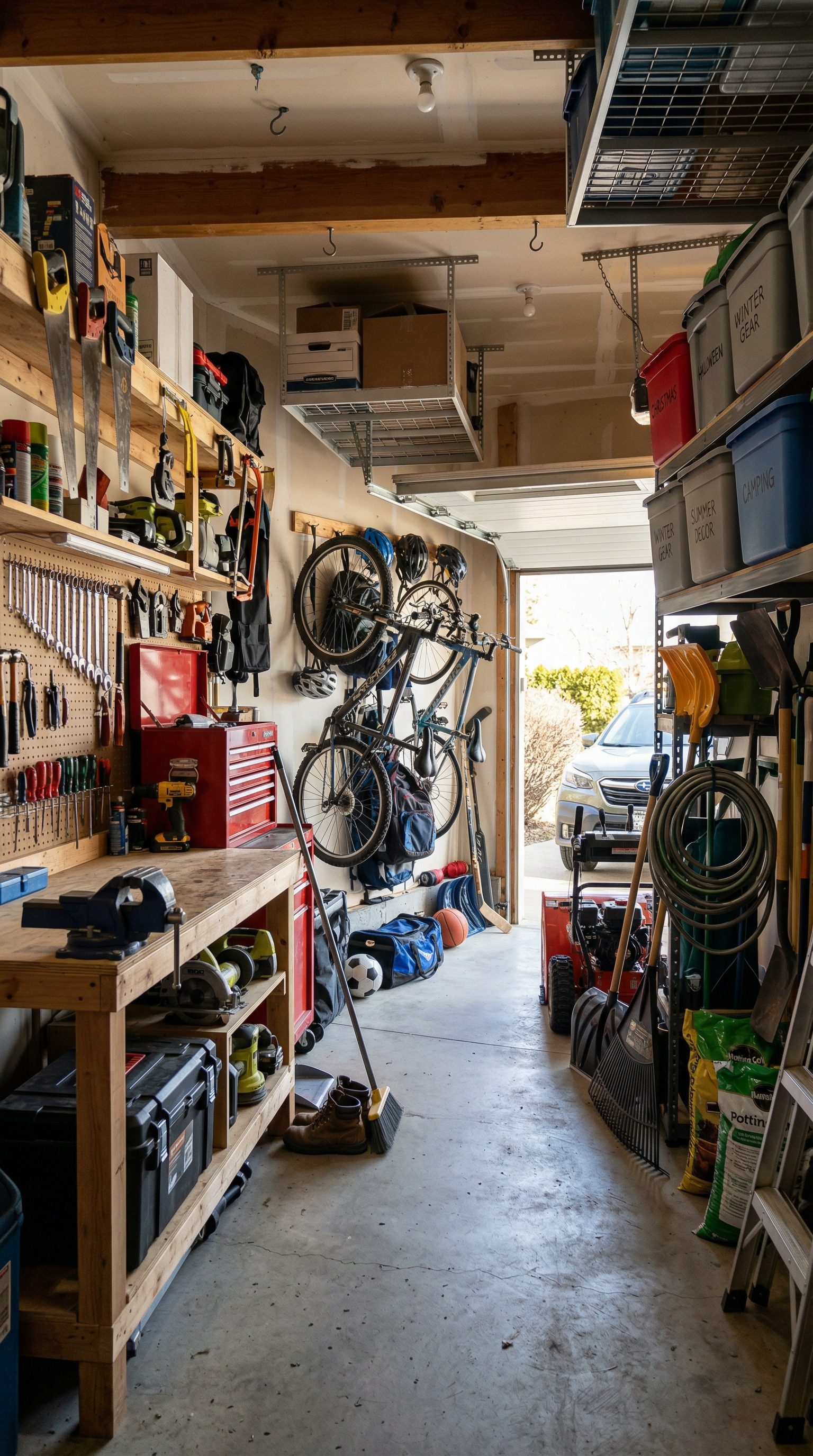
The Garage
Start here because it's usually the biggest project and the most emotionally detached. You're less sentimental about old paint cans than family photos.
- Toss anything expired: old paint, chemicals, motor oil
- Sports equipment you haven't used in 2+ years — sell or donate
- Tools: keep what you use, sell the rest (you can always borrow or rent specialty tools)
- Holiday decorations: be honest about which ones you actually display
- If it's been in a box since your last move, you don't need it
Bedrooms and Closets
Clothing is the second-largest category of stuff in most homes, and the hardest to let go of emotionally.
- Try the hanger trick: turn all hangers backward. After 60 days, anything still backward gets donated
- If it doesn't fit now, let it go. Your new closet deserves clothes that fit the person you are today
- Shoes: be brutal. If they're uncomfortable, worn out, or you have three pairs of the same style, cull
- Bedding: keep 2 sets per bed. The rest goes
- Under the bed: if you forgot it was there, you don't need it
Kitchen
Kitchens accumulate single-use gadgets, duplicate utensils, and expired food like no other room.
- Check every expiration date in the pantry and fridge — toss anything expired
- Duplicate pots, pans, and baking dishes: keep your best, donate the rest
- Single-use gadgets (avocado slicer, egg separator, melon baller): if you can do it with a knife, you don't need the gadget
- Mismatched food storage containers: match lids to bases, recycle the orphans
- Cookbooks you haven't opened: photograph the recipes you love, donate the books
Bathrooms
Quick wins here. Most people can clear a bathroom in under an hour.
- Expired medications and sunscreen — toss (check your local pharmacy for safe medication disposal)
- Hotel toiletries you've been collecting — donate to a shelter
- Half-used products you abandoned for something better — toss
- Worn towels: keep your best sets, donate or turn old ones into cleaning rags
Living Room and Common Areas
- Books: keep favorites, donate the rest to the library or a Little Free Library
- DVDs, CDs, old media: if it's available on streaming, you don't need the physical copy
- Throw pillows and blankets: keep what you actually use, not the pile on the couch
- Board games with missing pieces: recycle
- Magazines and catalogs: recycle all of them
Home Office
- Old papers: shred anything with personal information, recycle the rest
- Cables and chargers for devices you no longer own: recycle at an e-waste center
- Office supplies: keep what you use weekly, donate the excess
- Old electronics: many LA locations accept e-waste for free recycling
Where to Sell in Los Angeles
LA is one of the best cities for selling used items. You have options:
- Facebook Marketplace — great for furniture, electronics, and larger items
- Consignment shops — designer clothing, accessories, and home decor
- Buy Nothing groups — hyperlocal community groups for giving things away
- Garage sale — classic approach, works best in residential neighborhoods
- Specialty resellers — used bookstores, record shops, and vintage stores
Set a deadline for selling. If it hasn't sold 2 weeks before the move, donate it. Don't let unsold items become a new source of stress.
Where to Donate in Los Angeles
- Goodwill and Salvation Army — accept most household items
- Habitat for Humanity ReStore — furniture, appliances, and building materials
- Local shelters — toiletries, towels, blankets, and kitchen items
- Schools and community centers — art supplies, books, sports equipment
- Pickup services — many LA organizations offer free pickup for larger donations
The Financial Case for Decluttering
Moving costs in Los Angeles average between $1,000 and $3,000 for a local move. Movers typically charge by the hour, and more stuff means more hours. By decluttering before you move, you can often save 20-30% on your moving bill.
Add in income from selling items (most families make $200-$500 selling before a move) and the math is clear: decluttering before moving pays for itself.
Moving soon? We can help.
Our pre-move decluttering service gets you ready for moving day — stress-free.
Book a Free ConsultationA move is a natural reset point. Take advantage of it. Everything you don't bring to your new home is something you'll never have to organize, clean around, or trip over again. Start early, be decisive, and give yourself the gift of a fresh start in a home that contains only what you truly need and love.