Kids Room Organization: How to Create a System Kids Will Actually Follow
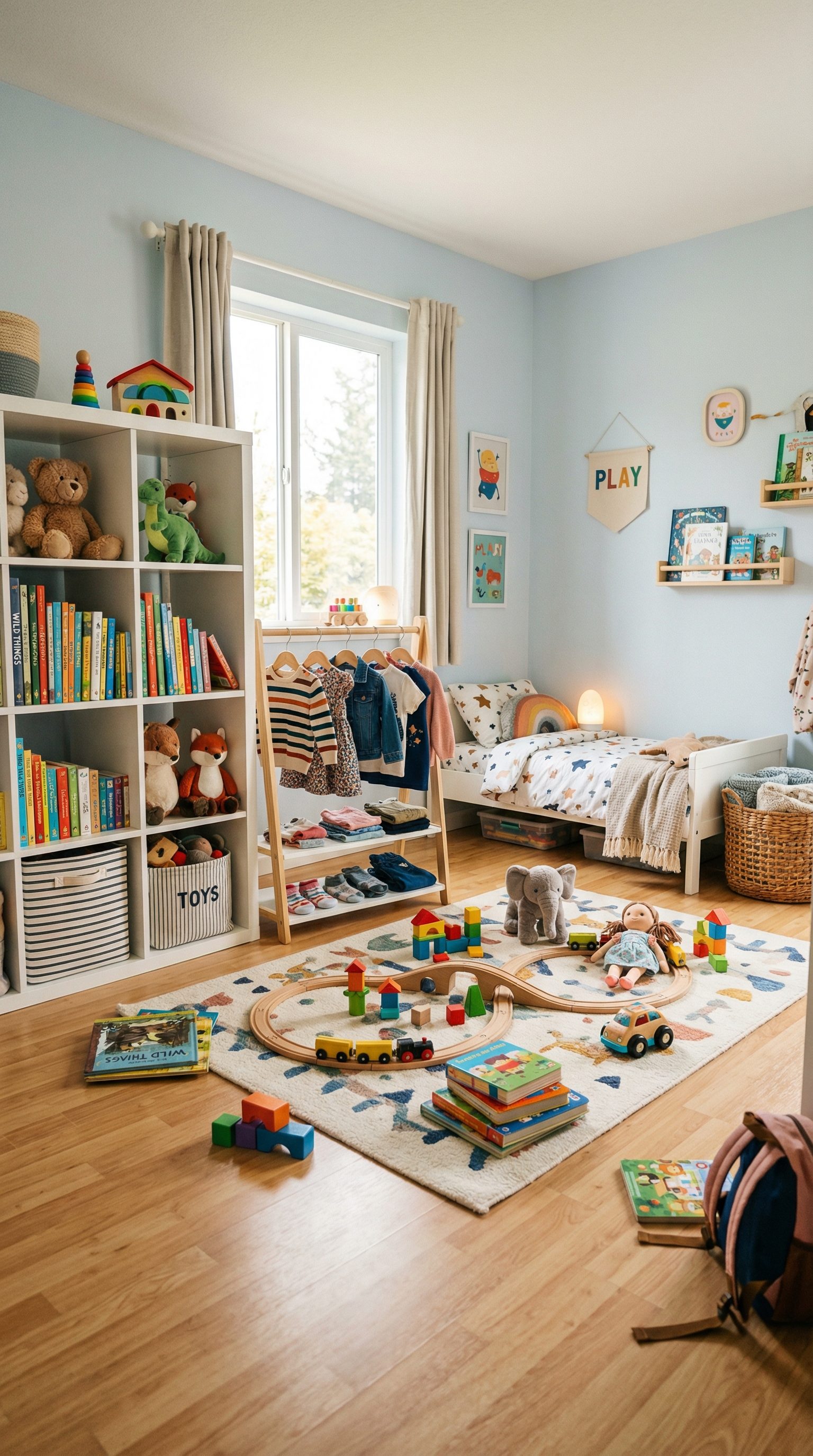
You organized your child's room on Saturday. By Tuesday, it looks like a toy store exploded. Sound familiar? The problem isn't your child — it's the system. Most kids' room organization fails because it's designed by adults, for adults. Kids need something different.
After organizing hundreds of kids' rooms across Los Angeles, we've found that the most successful systems share a few key principles. Here's how to create organization that your kids will actually maintain.
The Golden Rule: Make It Easy
Adults can handle complex systems. Kids can't — and shouldn't have to. The number one reason kids don't put things away is that the system is too complicated or too difficult for their age.
The test: Can your child put every toy away in under 5 minutes without your help? If not, the system is too complex. Simplify it.
This means:
- Open bins instead of closed containers with latches
- Low shelves they can reach without a step stool
- Picture labels for kids who can't read yet
- Fewer categories (5-7 max for young kids)
Toy Organization by Age
Ages 2-4: The Bin System
Toddlers need the simplest possible system. Use large, open bins with picture labels. One bin for blocks, one for stuffed animals, one for cars, one for everything else. That's it. Four bins. A toddler can handle four decisions.
Ages 5-7: Categories Expand
School-age kids can handle more categories. Add bins for art supplies, dress-up clothes, board games, and building sets. Use word labels with pictures. Start introducing the concept of "homes" for toys — every toy has a home, and it goes back there when playtime is over.
Ages 8-12: Ownership Increases
Older kids can participate in designing their own system. Let them choose bin colors, decide categories, and make labels. When kids have input, they're far more likely to maintain the system. Introduce closed storage for collections and items they want to keep private.
The best organization system for a child's room is the one the child helped create. Ownership breeds responsibility.
The Toy Rotation Strategy
Most kids have far more toys than they can play with at once. Research shows that children actually play more creatively with fewer options. Too many choices leads to overwhelm and shallow play.
How toy rotation works:
- Divide toys into 3-4 groups
- Put one group out, store the rest in a closet or garage
- Rotate every 2-4 weeks
- When you rotate, watch which toys get ignored — those are candidates for donation
Kids get excited about toys they haven't seen in a few weeks. It's like getting new toys without spending a dollar. And with fewer items out, the room stays cleaner with less effort.
Clothes Organization for Kids
Kid's clothing presents unique challenges. They grow out of things constantly, they need to dress themselves (with varying levels of success), and laundry seems to multiply overnight.
What works:
- Lower the closet rod so kids can hang and retrieve their own clothes
- Use drawer dividers with picture labels showing what goes where
- Pre-plan outfits — a hanging organizer with 5 compartments (Monday through Friday) eliminates morning battles
- One-in-one-out rule for new clothes to prevent overflow
- Seasonal rotation — store off-season and too-small clothes in labeled bins
Keep a donation bin in the closet. When something doesn't fit or they've outgrown it, it goes straight in. Do a donation run once a month.
School Supplies and Papers
Artwork, school papers, worksheets, projects — it comes home in a flood. Without a system, it ends up in piles on every surface.
Our recommended system:
- An inbox tray by the front door or in the kitchen for incoming papers
- A display wall or string with clips for current favorites (rotate weekly)
- A keepsake bin — one per school year, limited size — for the truly special pieces
- A recycling station for everything else (take a photo first if you want to remember it)
The key is processing papers the same day they come home. Once a pile forms, it becomes invisible and permanent.
Creating a Homework Station
Every school-age kid needs a dedicated spot for homework and projects. It doesn't have to be a separate desk — it can be a section of the kitchen table with a portable caddy of supplies.
What the station needs:
- Good lighting
- Pencils, pens, erasers, scissors, glue in a caddy or cup
- Scratch paper
- A folder for homework that needs to go back to school
- No toys or distractions within arm's reach
The Bedtime Cleanup Routine
The best organization system in the world fails without a maintenance routine. For kids, this means a simple, consistent cleanup time — ideally right before the bedtime routine starts.
Make it work:
- Set a timer (5-10 minutes depending on age)
- Play cleanup music (same song every time creates a Pavlovian response)
- Make it a game, not a punishment ("Can you put all the blocks away before the song ends?")
- Help younger kids; supervise older kids; trust teenagers to do it on their own
- Praise the effort, not the perfection
Need help organizing your kids' rooms?
We create kid-friendly systems that actually stick — starting at $500.
Book a Free ConsultationOrganizing a kids' room isn't about making it look like a magazine. It's about creating systems simple enough that a child can maintain them independently. When cleanup is easy and quick, it stops being a battle — and starts being a habit.